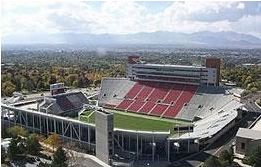
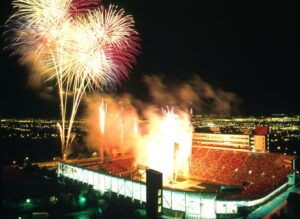
The University of Utah’s Rice Stadium was selected to serve the 2002 Winter Olympics for the Opening and Closing Ceremonies. However, the existing stadium had to be removed and the new stadium constructed to provide for the Olympics and a seating capacity of 50,000. Originally the project began by splitting the project into three phases of construction. The new director for the division of Facilities Construction and Management proposed a new delivery strategy to expedite the project. Bonding funds would be used to finance a single project and the contractor selected would aid the architect to assure the project could be completed quickly and within the project budget. This resulted in the tear down and construction of the new stadium in a 15-month window that was accomplished without missing a football game. With a generous donation the new stadium became the Rice Eccles Stadium.
Rice-Eccles Stadium, site of the opening and closing ceremonies for the Olympics, has expanded its normal accommodations for 46,500 spectators to seat in excess of 50,000 for the games. The expansion project, completed in 1998, was originally planned with three separate phases, each to be constructed between football seasons. The architects based the bowl seating configuration on economics and a tight construction schedule, as well as creating a sense of enclosure. The lower bowl is constructed of slab-on-grade seating tiers while the upper bowl is steel. The 2002 Winter Olympics Games' requirements dictated that a northeast tunnel be added for direct access to the playing field and that the roof of the stadium box accommodate the press. Ground was broken for the project in April 1997, and construction proceeded during the 1997 football season.
Architect: FFKR Architects & Contractor: Layton Construction